


Table of Contents

Trade show marketing is an essential part of participation, as it can leverage the event and increase your reach, ultimately leading to an uptick in revenue. These marketing strategies often encompass the use of online and offline tactics, including email and social media campaigns, as well as trade show displays and freebie giveaways. This process should not be taken lightly, and planning it is often time-consuming.
This article presents ideas on how to prepare for your next trade show. It also provides some know-how on successful strategies to apply before, during, and after the main event. You’ll also find a few tips on how to turn your trade show event into a source of revenue.
Key Takeaways
- Trade show marketing is a strategic promotional campaign at industry-specific events to build serious connections and increase sales;
- Attending trade shows as a business remains essential as it offers an unparalleled opportunity for face-to-face interactions;
- The best ways to develop a trade show marketing strategy include defining clear goals, identifying target audiences, and deciding on messaging;
- Avoid participating in events that don’t suit your primary market or ignoring competitors.
What Is Trade Show Marketing?
Trade show marketing is an event-based strategy that brings together businesses and consumers to showcase products or services, generate qualified leads, and forge customer relationships.
Participating in trade shows doesn’t simply mean attending the event and setting up your booth. Preparing for a trade show requires a meticulous approach, with tons of planning and more effort than you might expect.
The three stages of your event are setup, execution, and follow-up. You should plan and execute successful trade show marketing strategies if you want attendees to convert into lifetime customers.
Why is Trade Show Marketing Still Important
In-person events like trade shows complement your marketing efforts, especially for brand-building. Trade shows offer several marketing opportunities that businesses can seldom find in the online world. These events are in a unique position to forge partnerships and alliances that cannot happen in the digital sphere. Let’s break them down:
- In-person meetings are the primary advantage of trade shows, as nothing can replace the value of a handshake, a shared laugh, or a meaningful conversation. Such situations create a solid foundation for future industry relations.
- Corporate partnerships create an easier path to success. Strategic alliances between organizations compound their unique strengths, resources, and visions, making positive results more easily attainable.
- Reinvigorating your team by using a trade show as an opportunity for team building. It shows your team that you trust them to be your brand ambassadors and provide them with networking opportunities to learn and grow as well.
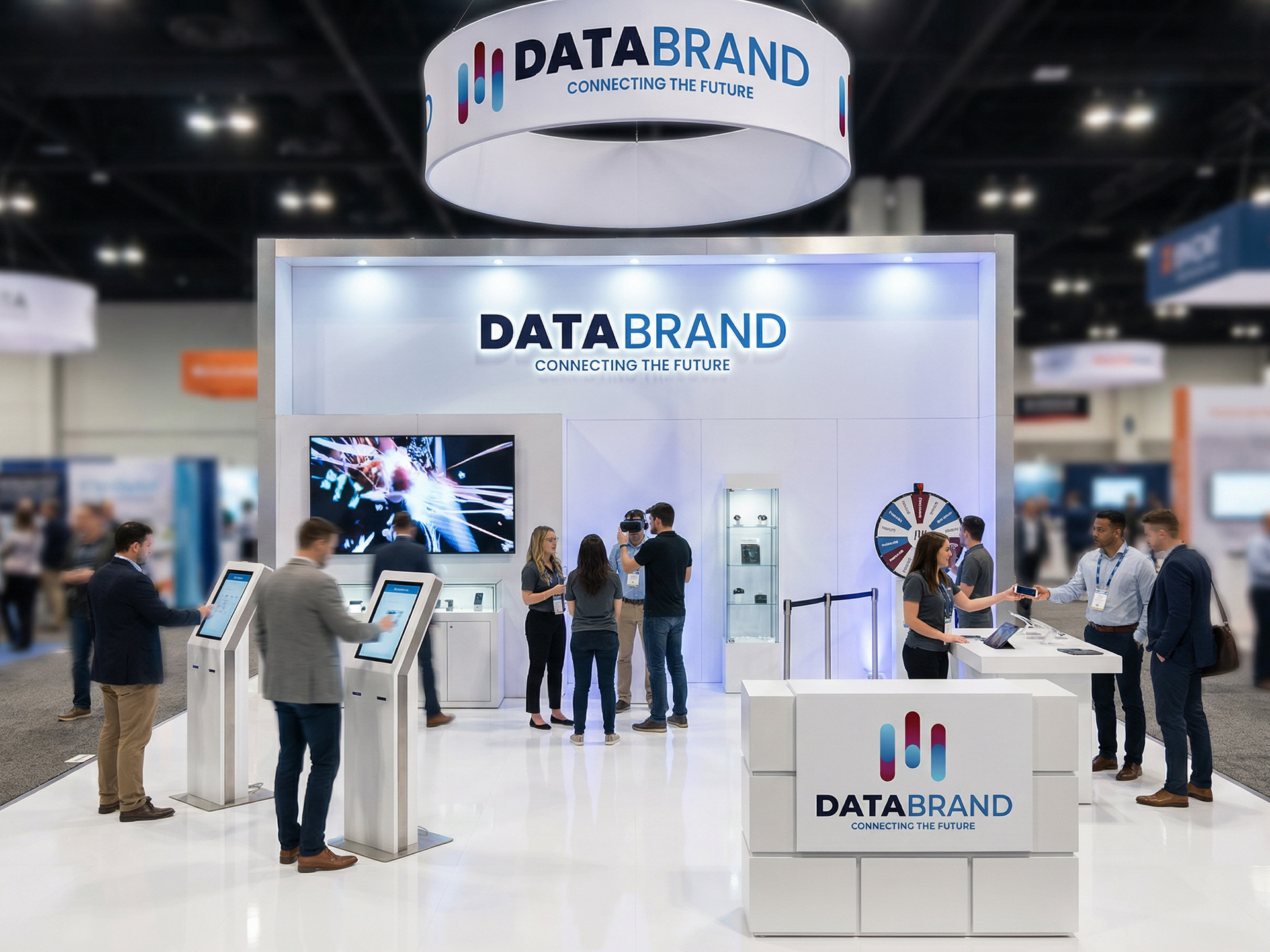
Participating in a trade show is certainly costly. It requires funds, human resources, and time. That being said, a fruitful presence backed by a marketing strategy makes the effort and investment worthwhile. Build your trade show marketing strategies around the successful implementation of the following tactics and ensure success at your next event.
Define Your Goals
You need to define what exactly you want to get out of the business event and plan your participation accordingly. How many people do you want to visit your booth? How many items do you plan to sell? How many new leads do you want to generate? Everything counts, and by setting clear goals for these factors, you'll be able to plan accordingly.
Identify Your Target Audience
Visibility plays a key role in reaching your target audience during a trade show or other similar events. People need to be able to see your branding, and your booth needs to look interesting to capture attention. You never know who your customers may be. A person who might not have known about your products or services may be drawn to your booth and become a loyal customer. That being said, the most effective booth should be designed for your key demographics. So who are they? Sole entrepreneurs? CEOs? Students? Enthusiasts? Families? Understand their motivations, like what they want to get from you: technology, entertainment, or simple networking?
Research Your Competitors
Research your rivals and see how they’re attracting their traffic. Use that knowledge to develop your own trade show marketing strategy. This will help you differentiate your offerings and maximize your ROI.
If you see that your competitors use large booths that feel more welcoming to their customers, and they get more traffic as a result, you should consider doing the same. If they drop new products right before the event, or even at the event, you could do the same as well, as this piques people’s interest and attracts them to your booth.
Allocate Your Trade Show Budget
Earmark a specific buffet to prevent overspending at your trade show. You can allocate your budget by splitting it over the following categories.
- Foresee approximately 40-45% of your budget for space and its design. This includes your expo booth construction, embellishments, and furniture.
- Earmark 5%-8% of your budget for promotional expenses. These might include sharing your expertise on social media, preparing for pre-show marketing, etc.
- Allocate 12-15% of the budget for travelling and staffing. If the trade show is nowhere close and you need to travel to another city or country with a team, hotel and travel expenses will take up a chunk of your budget.
- Dedicate 10-15% of your money to logistics. This includes shipping, setting up, and dismantling your signage, merch, and more.
- Keep the remaining 20%-30% of your budget as a flexible reserve for unexpected costs.
Decide Your Messaging
Your messaging needs to leave no room for confusion. It should make your potential customers understand exactly what you’re offering. This increases your credibility with your audience and creates an emotional response, which influences decision-making more than reasonable pricing alone. Refine every piece of content you display at the event to work towards a single goal. This saves time and prevents confusion. To get the job done, you’ll need to identify your audience’s pain points, desires, and goals. Try at least three to five key styles of your messaging, and test them on landing pages or ad copies. Most importantly, the messages you share online and those you present at the event must be coherent.
Pre-Trade Show Marketing
According to research, investing 15% or more of your entire budget in your pre-trade show preparations will help you go beyond the mediocre and create a busy exhibit rather than standing around watching people pass by and visiting competitors.
Ideally, your pre-show marketing efforts should begin six to eight weeks before the event. You’ll have enough time to build awareness, schedule meetings, and create genuine hype. Here are a few tried-and-tested pre-trade show marketing ideas to help you gain tangible outcomes at your next trade show.
Use Social Media
Given that the average person spends over two hours on social media every single day, communicating your presence at a trade show with your followers is definitely worthwhile. Let your followers know where your booth will be, tease products, or share behind-the-scenes content on various platforms, such as LinkedIn, Facebook, Instagram, and Twitter.
Encourage followers to stop by and say hello. Meeting them will establish a personal connection, put faces to names, and let you know who your followers and customers are. Sweeten the deal with a consultation or a giveaway.
Run Email Marketing Campaigns
Don’t leave connections to chance. Email marketing campaigns can drive qualified leads, build loyalty, spark anticipation, and help you establish lasting relationships.
You can also send personalized emails directly to your customers, asking them to schedule a meeting with you.
Run Targeted Ads
The effect of targeted advertising can be significant, and it’s vital during pre-trade show preparations. Use any industry platform, such as LinkedIn or Google, to target specific audiences. Make sure the visitors whose attention you are competing for have already signed up for the event. Focus on people who match your ideal audience. Check their industry, job role, and location. Run this campaign two or three months before the trade show to make your presence known.
Design Your Booth
A well-thought-out trade show booth design will attract more traffic than you imagined. Larger booths with some space for multiple customers to roam freely usually perform better than small, cramped spaces that barely allow staff to stand.
It’s not all about booth size; it has more to do with how you use it. A large but empty booth is no more appealing than a small one. Use custom trade show displays, such as curved pop-up displays, retractable banners, or X-stands to communicate essential information to your visitors. They’ll be able to explore more comfortably and freely while learning all they need to know.
An excellent example of a well-executed trade show booth design was during the LA Auto Show, when Lexus created a skate park to debut its new hoverboard. Attendees controlled a 3D game using the actual hoverboard, then shared their gameplay on social media. This experience turned visitors into content creators and generated viral buzz for the brand.
Check out trade show banner design tips to create effective displays for yor upcoming event.
Order Promotional Products
Get marketing materials in the preparation phase to avoid last-minute delays. Freebies you hand out to your booth visitors go a long way in making an impression.
The right giveaways draw people in. Useful items like tote bags, power banks, notebooks, and stickers capture attention and give visitors a reason to stop at your booth.
Create Consistent Messaging for Your Staff
This is one of the most important trade show marketing ideas because when attendees meet a group of team members who share the same message, they’re more likely to trust your brand and remember your company.
Besides, training your staff in advance will help them answer questions more easily and handle difficult situations. They also gain the ability to demonstrate the product confidently and deliver the brand message in a high-paced environment.
Partner with Influencers
Influencers have already built an audience who trusts them. Collaborating with influencers will grant you access to their base and expand your reach.
You’re better off partnering with an influencer who creates content for the industry you work in, as their viewers are more likely to convert. On the other hand, you can also partner with influencers who have a much larger audience, as at least some of their viewers might be interested in what they promote.
Set up Lead Capture System
Create an automated system to collect contact information from your customers to gather insight. Once this process is functional, it will result in lead generation and growth for your business.
If the system is properly built, visitors who pass by your booth can leave their contact information without a second thought. This system will enable you to collect data and use it for personalized marketing campaigns or targeted advertising.

During-the-Event Marketing
As the show goes on, real-time marketing techniques come into play. If you train your staff properly and create a setup that attracts all types of people, you’ll have a successful showing. Here are some of the best trade show marketing ideas you can implement during your event.
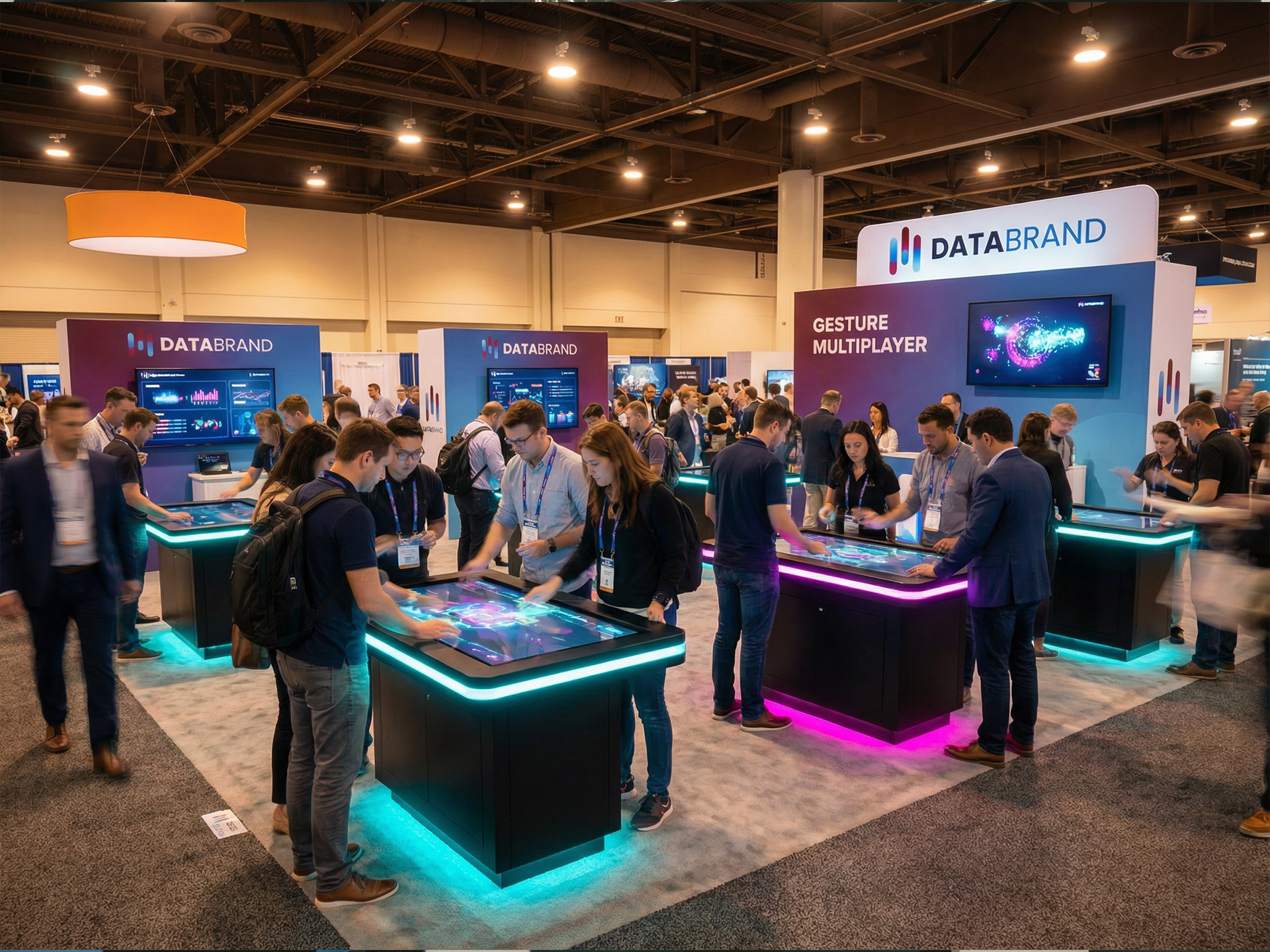
Gamify Your Booth
Interactive and moving elements always draw attention to your stand. People enjoy a hands-on, tangible experience. This is exhibited by the fact that people are 78% more likely to purchase a car after a test drive.
Providing a similar experience in your booth will bring higher engagement. Set up product samples people can examine, incorporate games with leaderboards or multi-step challenges, and prolong a ten-second customer glance into a three to five-minute connection.
Capture Data in Real Time
This is one of the best options for on-the-fly strategic adjustments. Instead of collecting business cards and then sorting them out, you just scan their event badges and collect corresponding data during the event.
This makes the customer valuation process a few times faster, as the sales team efficiently prioritizes the prospects and increases the conversion rate.
Offer Giveaways
One of the top trade show marketing best practices is to gift your visitors promotional products and create buzz around your booth. When people receive something, they feel gratitude and a desire to give something back. What better way to turn customers into buyers than with giveaways?
Giveaways provide yet another advantage most people overlook. They encourage people to share their gifts on social media and mention your brand. This amplifies your reach among your guests’ social circles.
Provide Show-Only Discounts
One of the best-performing trade show marketing techniques is providing visitors with exclusive discounts. Everyone knows the psychology behind a limited-time offer that creates a sense of urgency, yet everyone falls for it.
In-person deals make attendees feel a sense of loyalty to your brand. Physical representation of a product at your booth, accompanied by a special offering, gives something you cannot replicate via email or online.
Think of Social Media Live Coverage
According to Statista, nearly 90% of event professionals invest in social media. This is because social media is a powerful tool for promoting their trade show presence in real time.
Help people find your brand by creating a simple hashtag and using it consistently across all your trade show posts. Going live on social media during the event is another great way to engage remote audiences who may be interested in your offerings but cannot attend in person. Use your live sessions to share highlights such as product launches and industry insights.
Post-Event Trade Show Marketing Strategies
You’re not done with the event when it closes up. There’s still much to be done after the show to shore up existing connections and follow up on leads. Here’s how you can capitalize on existing and potential connections after your trade show.
Properly Segment Leads
No follow-up can be successful if you use a one-size-fits-all tactic. If you gathered contacts during the event, you need to split them up into groups with similar interests before you reach out to them. Eliminate chaotic data and create an actionable plan.
This allows you to personalize your follow-ups and remind your prospects about you. You can also split your leads into three categories, hot, warm, and cold, to prioritize who to contact first.
Share a Wrap-up of the Event on Social Media
This is a vital post-event marketing tactic to warm up new connections and keep conversations flowing. Communicate what you learned, thank your customers for visiting, and share the experience with those who didn’t attend. Posting photos, videos, or other insights sets the groundwork for further blog posts or marketing campaigns.
Think of Sending Thank You Emails
Follow up with a personalized thank-you email to all those who visited your booth during the trade show within forty-eight hours, and you’ll be more likely to close a deal while your guests are still intrigued by your product.
Ask for Feedback
Getting feedback from your audience is important for further improvements. When you get real reviews, you find out what worked and what didn’t. You’ll be able to take all the feedback into account and adjust for your next event.
This might include issues with booth location, staff performance, or other organizational missteps. The post-event survey re-engages clients and allows them to recall the products they were most interested in.

Top Trade Show Marketing Mistakes to Avoid
Studying errors is a good way to improve. Assessing them helps you understand what to avoid the next time you’re participating in any event and represent yourself in a better way.
- Don’t participate in trade shows that don’t satisfy your audience’s needs. Instead, invest your time and resources in events that speak directly to your target niche.
- Don’t set unclear goals. Define what you want to get from the trade show. It can be as simple as generating leads, building brand awareness, or forging new partnerships.
- Don’t send ineffective staff. Your team represents your brand. Train them so that their messaging is aligned and that they can express a deep understanding of what they’re offering.
- Don’t ignore competitors. Instead, learn from them, examine their strengths and strategies, their offerings, their mannerisms, their weaknesses, and offer your strengths instead.
- Don’t plan poorly. Your every step should be calculated so that the visitors attending your booth feel like you’ve covered every little detail, from booth signage to automated technologies.
Turn the Next Event Into Revenue
We should admit that not every trade show is worth your time or money. But when you find the right one that draws the people you want to reach, everything changes. Go in with a plan, know what you want to walk away with, and make every conversation count.
Whether you're there to find new clients or grow your network, stay focused on what matters. Do that, and your next event will be one of the smartest investments you make all year.
FAQs
How to promote a trade show?
Start early and use social media, email campaigns, your website, and personal outreach to existing clients. Let people know that you'll be there and what you'll be showcasing.
How to attract attention at a trade show?
Use attractive signage, such as a high-hanging banner or a tablecloth covering your booth table. Before you start designing your graphics, look for trade show display ideas to make sure you are getting products that have proven to be effective. Pair the booth design with live demonstrations or interactive experiences to create the right energy.
Do I need marketing collateral for a successful trade show event?
Absolutely. Brochures, business cards, product sheets, and branded merchandise give people something tangible to take home.
How should I measure trade show success?
Go back to the goals you set before the event. Track the number of leads generated, meetings booked, sales closed, or new contacts made. Most importantly, never change the goals after the trade show to feel good about the results you had during the event.
Can you provide some examples of successful trade show marketing strategies?
Sure. Some brands run pre-show contests to build buzz, others schedule one-on-one meetings in advance so their calendar is full before they even walk through the door.
Apple is known for building massive pre-show anticipation through teaser campaigns and exclusive previews.
Samsung regularly schedules press briefings and private demos ahead of the event.
HubSpot runs pre-event email and social campaigns that drive registrations for their booth sessions weeks in advance.