


Table of Contents

Dropshipping has recently gained popularity due to the flexible opportunities for entrepreneurs in the e-commerce sector. The numbers prove it: the global dropshipping market is set to nearly triple from $410 billion in 2025 to $1.12 trillion by 2030, driven by social commerce, cross-border trade, and instant logistics integration. The opportunity is massive, but so is the competition.
Key Takeaways
- Dropshipping is a form of business where a vendor sells products online without holding a physical store.
- The seller collaborates with a supplier who’s responsible for delivering orders to the customers.
- Pros of dropshipping include low initial costs, no costs for maintaining a physical location, flexibility for remote work, and others.
- Cons of dropshipping are the lack of product quality control, the possibility of long shipping times, issues with customer trust, and others.
What is Dropshipping?
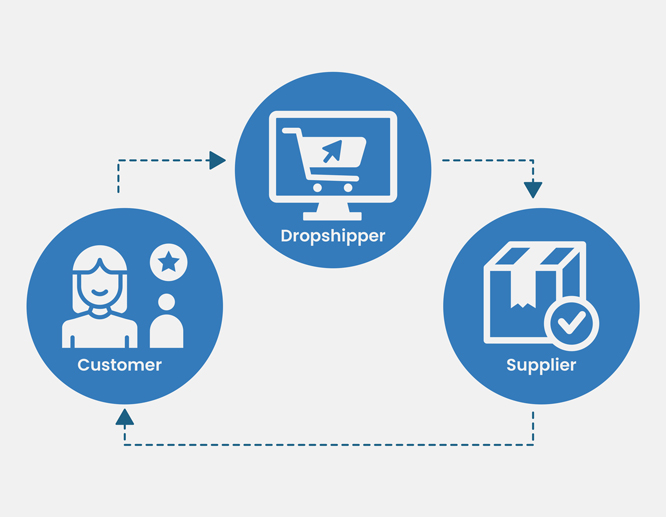
Many individuals who are intrigued by dropshipping wonder what exactly that concept is and how they can start a business in the field. Dropshipping is a retail fulfillment method where a store doesn’t keep the products it sells in stock. Instead, it partners with a supplier, and when a customer places an order on the online store, the store forwards it to the supplier, who then ships the products to the customer.
Dropshipping enables you to run an online store without the hassles of inventory management. Thus, you become a middleman between the customer and the supplier, allowing you to start an online business without the high startup costs.
This mode shifts your focus from managing a physical inventory and everything related to it, such as producing, storing, and shipping, to managing your online presence.
Still, you need to write relevant content, compelling product titles, and detailed descriptions to attract your target audience. Whether you're selling through a website, social media platforms, or online marketplaces, your listings should be optimized and regularly updated to remain visible and competitive. In other words, dropshipping is selling items you don't even touch.
What is a Dropshipper?
Dropshippers sell products online without maintaining a physical inventory of products. Once the order is placed, they buy the item from a third party and have it shipped to the customers through “blind shipping” or “white label shipping.” The dropshipper never sees or handles the product. In other words, dropshippers sell products stocked by another supplier. Once the order is received, suppliers get all the information related to the order via automated systems for direct delivery to the customer.
Dropshippers set retail prices in their online store. The duties of a dropshipper include processing orders, sorting them, and sending feedback to customers on successful orders or requesting information from dropshipping suppliers to communicate with customers.
What is a Dropship Order?
A dropship order is an order placed by a customer with an online retailer that is then forwarded to the supplier. The supplier is responsible for handling the product fulfillment and shipping it to the customer.
What is a Seller of Record?
Think of a Seller of Record as the official owner of a sale in the dropship model. It handles everything that makes a sale real: they own what you're buying until the moment you purchase it. They set the product’s original cost, which the dropshipper then marks up for their customers. They pack up your order and get it to your door. And if something goes wrong and you need to return it, they take care of that too. In short, the Seller of Record is the legal backbone of your entire shopping experience.
Can You Dropship Any Product?
You can dropship almost anything, but not everything. The prohibited list of selling products includes certain foods, medications, alcohol, and counterfeit items. When it comes to selling branded products, you'll need permission first. That means getting official approval from the brand itself or working through an authorized reseller. Without it, you’ll face legal trouble around intellectual property.
How Does Dropshipping Work? The Process Explained
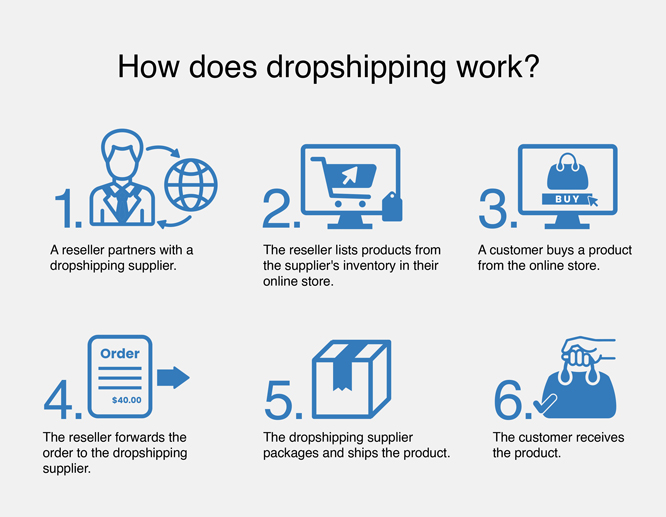
Here's how dropshipping works: you list items on your online platform, a customer makes a purchase, and you pass that order along to a supplier. They package it up and ship it straight to your customer's door.
Below, you can find the dropshipping business process broken down into steps:
Seller Establishes a Partnership with the Supplier
The most important condition for dropshipping is finding a reliable supplier. Once the seller finds a supplier, they negotiate terms and sign a contract. A strong supplier relationship ensures smooth operations and satisfied customers.
Customer Places an Order Through the Online Store
The process begins when a customer browses the seller's online store and decides to make a purchase. They select a product and make an order. Customers are sure they're buying directly from the retailer. Some stores even state ‘Ships from vendors’ or ‘Fulfilled by partner warehouses’ to let consumers know it’s a dropshipping company.
Seller Receives the Order Details
After the customer completes their purchase, the seller's system receives all the information related to the order. Though the seller now has everything needed to fulfill the order, they aren’t the ones who physically handle the product.
Customer is Notified with an Order Confirmation
As part of an order placement routine, customers receive an email confirming their order after the purchase. At this point, they're simply waiting for their product to arrive.
Seller Submits the Order to the Supplier for Fulfillment
After the customer completes the order, coordination begins between the seller and the supplier. The dropshipper sends the relevant information to the supplier, such as the product purchased, its quantity, and the customer’s data, who then delivers the order directly to the buyer’s doorstep.
Supplier Processes and Ships the Order
The supplier receives the order information and gets to work. They prepare the product for shipment and then hand it off to a courier. After sending the order, a tracking number is generated. In many cases, the supplier sends the tracking information to the seller, who then provides it to the customer.
Customer Receives the Delivered Product
The last step of this process is when the customer receives the package. If they find the order exactly as they expected, the seller earns their trust. If an issue arises, the customer might reach out to the seller, who then coordinates with the supplier to remedy it. If the customer remains dissatisfied with the service, it negatively affects the seller’s reputation.
Example of the Dropshipping Process
Suppose you own a dropshipping business that sells acrylic signs to customers for $40. You may be paying suppliers $15-$20 to make them, and earning $20-$25 per sale.
Is Dropshipping Legal?
Yes, dropshipping is a legal business model, though it must comply with various laws as an e-commerce company. These regulations may include, but are not limited to, consumer protection, taxes, and data privacy.
Is Dropshipping Worth It?
Yes, dropshipping is worth it, but it takes a lot of effort. Many entrepreneurs engage in dropshipping, as it has lately become one of the most lucrative business models. Dropshipping statistics show that:
- Nearly one-third of online retailers operate through dropshipping.
- Dropshipping accounts for roughly one in every four online purchases.
- Retailers using dropshipping models see earnings 50% higher than those managing their own inventory.
- Average profit margins range from 20% to 30% per transaction.
- Two-thirds of shoppers prefer checkout experiences with multiple payment methods.
- 86% of successful dropshippers focus on a specific product niche.
- More than one-third of Amazon sales are fulfilled via dropshipping.
Technological advancements in recent years have resulted in the rapid growth of online businesses, which is the most significant factor fueling dropshipping. Customers are inclined towards flexible shopping experiences due to their busy schedules. Simultaneously, advancements in digital payment systems ensure secure transactions, which encourage more consumers and businesses to engage in the online market.
Dropshipping Pros and Cons
Like any other business type, dropshipping also has its advantages and disadvantages. Let’s take a closer look.
Benefits of Dropshipping
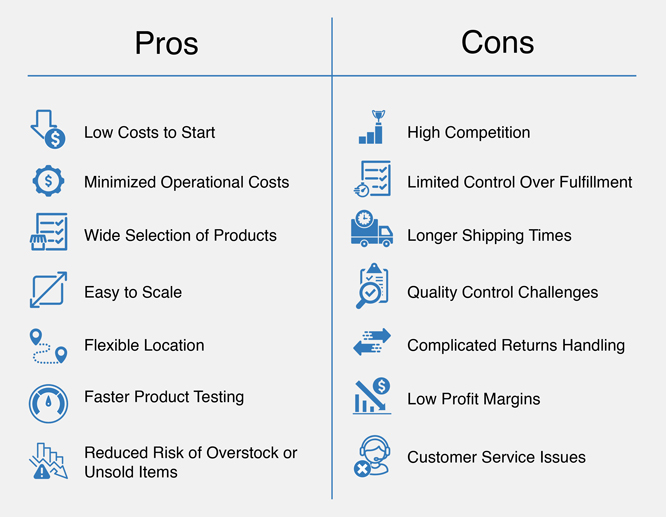
Dropshipping offers many notable advantages, starting from minimized operational costs to managing overstock or unsold items.
Low Costs to Start
As already mentioned, dropshipping requires no high initial costs. You can technically start with $100-$300 for basic setup costs, though most successful stores invest more in marketing and tools.
Minimized Operational Costs
Minimized operational costs are a key advantage of the dropshipping business model. Retailers significantly reduce expenses by outsourcing inventory management to a third party. They cut costs in staff management, warehouse fees, inventory management, and other expenses.
Wide Selection of Products
Another significant advantage of dropshipping is the wide selection of products. The benefit is that you can list a vast range of items from various suppliers on your online store and test different niches without holding a physical store.
Easy to Scale
Easy scalability is a major benefit of dropshipping because you can expand your business without the costs and logistical burdens of managing inventory. You’re free to add new products, test them, and handle increased sales volume.
Flexible Location
You only need a reliable internet connection for dropshipping. You can operate the entire business remotely from anywhere in the world.
Faster Product Testing
The dropshipping business model doesn’t require large upfront investments in inventory. This enables entrepreneurs to experiment with different products with a quicker time-to-market compared to traditional retail.
Reduced Risk of Overstock or Unsold Items
The issue of having items that never sell (dead stock) is virtually non-existent. Customers order products on an as-needed basis.
Cons of Dropshipping
If you’ve opted for dropshipping, you need to know its cons.
High Competition
High competition is a major con of dropshipping because the low barrier to entry means many sellers offer the same products. This intense competition often forces businesses to lower prices, resulting in squeezed profit margins. Dropshippers must invest in effective marketing strategies and a strong brand to stay competitive, but this can drive up advertising costs.
Limited Control Over Fulfillment
This is a common challenge for businesses that outsource their logistics to a third party. This lack of direct oversight can impact product quality, shipping times, and overall customer experience.
Longer Shipping Times
Shipping times can be long when working with international suppliers, leading to customer dissatisfaction. This situation increases the risk of customer complaints and reduced repeat business. If not handled proactively, it can damage brand loyalty.
Quality Control Challenges
One of the major downsides of dropshipping is the lack of direct quality control. The seller never physically handles the items, which creates potential issues such as no inspection before shipping, customer dissatisfaction, return and refunds complexities, and difficulty in branding.
Complicated Returns Handling
Complicated returns handling is a significant drawback because the retailer acts as a middleman between the customer and a third-party supplier. This makes the process less direct and more complex.
Low Profit Margins
Low profit margins are a drawback of dropshipping, as you don't buy in bulk and often pay higher per-unit costs. This means you have to sell a higher volume of products than traditional retailers do to achieve profitability.
Customer Service Issues
If customers have complaints, you'll have to deal with your suppliers to resolve them. Every unresolved issue has a direct impact on your business reputation, even though the problem does not originate on your end.
Is Dropshipping Right for You?
Dropshipping could be right for you if you’ve decided to sell online with budget-friendly startup costs and flexibility. With the pros and cons provided above, you’ll have a clear vision of what to expect. Low initial costs and the absence of a need for a warehouse, the availability of a wide range of products, and easy scalability on one hand, and low profit margins, complicated returns management and customer care, quality control challenges, and possible long delivery timeframes on the other hand, are what you should consider.
How Can Square Signs Help with Your Dropshipping Business?
Square Signs is a professional sign-making company that offers a comprehensive range of signage products. Our offerings are suitable for several industries, from retail and hospitality to real estate, healthcare, and events. As your dropshipping partner, we handle everything from production to shipping. This means that you can focus on marketing and forget about logistics. In our store, you can find a wide range of custom sign products, such as storefront signs, banners, vehicle wraps, trade show displays, and custom interior signage. We offer flexible customization options to meet your clients' specific needs. If you’re ready to add premium signage to your dropshipping business, contact us to discuss partnership opportunities.
Dropshipping FAQs
What Business Type is Dropshipping?
Dropshipping is a business model where a seller collaborates with a supplier to sell products online. The seller doesn’t own a warehouse, and once the buyer puts an order, the seller contacts the supplier to send the order to the buyer from the supplier’s store.
What is a Dropshipping Store?
A dropshipping store is an online store where you can find a large variety of products sourced from different suppliers.
Does Dropshipping Really Work?
Yes, it does. Dropshipping can definitely be profitable as most sellers earn 20-30% profit margins per sale. However, your actual earnings depend on what you sell, your expenses, and how competitive your market is. In crowded niches, profits shrink fast. Success comes down to smart product choices, creative marketing, and building a brand that stands out.
Is Dropshipping Reselling?
Yes, dropshipping is a form of reselling, but it differs from specific reselling models. The main difference is the absence of inventories on the seller’s side. Instead, a third-party supplier is included in the process to send the products directly to the customer after the customer places an order.
Is Dropshipping Safe?
Yes, dropshipping is a legitimate business model, the safety of which depends on complying with the regulations and mitigating risks like scams and supplier issues. To avoid unpleasant surprises, a dropshipper should always verify suppliers and comply with all the relevant laws.
Where to Sell Dropshipping Products?
You can sell dropshipping products in many online marketplaces, such as Amazon, eBay, Zendrop, TopDawg, or AliDropship.
Is Dropshipping a Good Idea?
Dropshipping is a good idea for aspiring entrepreneurs. When you’re well-informed about the advantages and disadvantages of dropshipping, you’re more likely to make a wise decision on whether or not to start your own dropshipping business.
Is Dropshipping Dead?
No, dropshipping is not dead. It has evolved considerably. The traditional model involved finding trending products from platforms like AliExpress and selling them despite long shipping times. This approach is now outdated. Today's dropshipping philosophy focuses on building a brand, improving product quality, and minimizing shipping times as much as possible.
Does Square Signs Offer Dropshipping?
Yes, it does. Square Signs offers an extensive selection of signs to benefit any business. Whether you need specific signage or prefer a particular material, we're here to support your dropshipping needs. We also offer an online design tool that allows customers to upload their designs, create them from scratch, use a customizable template, or even generate images with AI.
Do I Need an LLC to Start Dropshipping?
No, there is no such legal requirement to start dropshipping. You can start as a sole proprietor, though opening an LLC is recommended once our business generates consistent revenue.
Looking to start your own custom signage dropshipping business? Partner with Square Signs to find all your favorite signage and printing products!