


Table of Contents

Printing is the backbone of visual communication, something businesses use for many different reasons. It can be a tool for brand shaping, promotion, and decoration, used across various industries. High-quality visuals can generate significant revenue for retail stores, clinics, real estate agencies, construction companies, and beyond.
The problem here is to find a reasonable, responsible, and reputable printing company, ready to guide you towards the best printing method your business needs. Collaborating with a pro like Square Signs is best. This is a full guide to the main types of printing, their pros and cons, what they’re especially suited for, and which type is most appropriate for your business.
Key Takeaways
- There are two main types of printing styles: traditional and digital printing.
- Traditional printing uses plates, offers lower unit costs for high-volume production, but requires longer turnaround times.
- Digital printing skips plates, delivers faster results, and is ideal for small-batch and customized designs.
- Popular traditional techniques include offset, letterpress, and screen printing.
- Common digital printing methods include 3D printing, LED UV printing, and inkjet printing.
The History of Printing
The history of printing dates back to ancient times, the fourth millennium BCE. It first appeared in the Proto-Elamite and Sumerian civilizations to certify clay tablets. Other printing forms include block seals, pottery imprints, and cloth printing. Later, woodblock printing emerged, used for the mass production of texts by carving characters in reverse onto wooden blocks by the seventh century in Tang China.
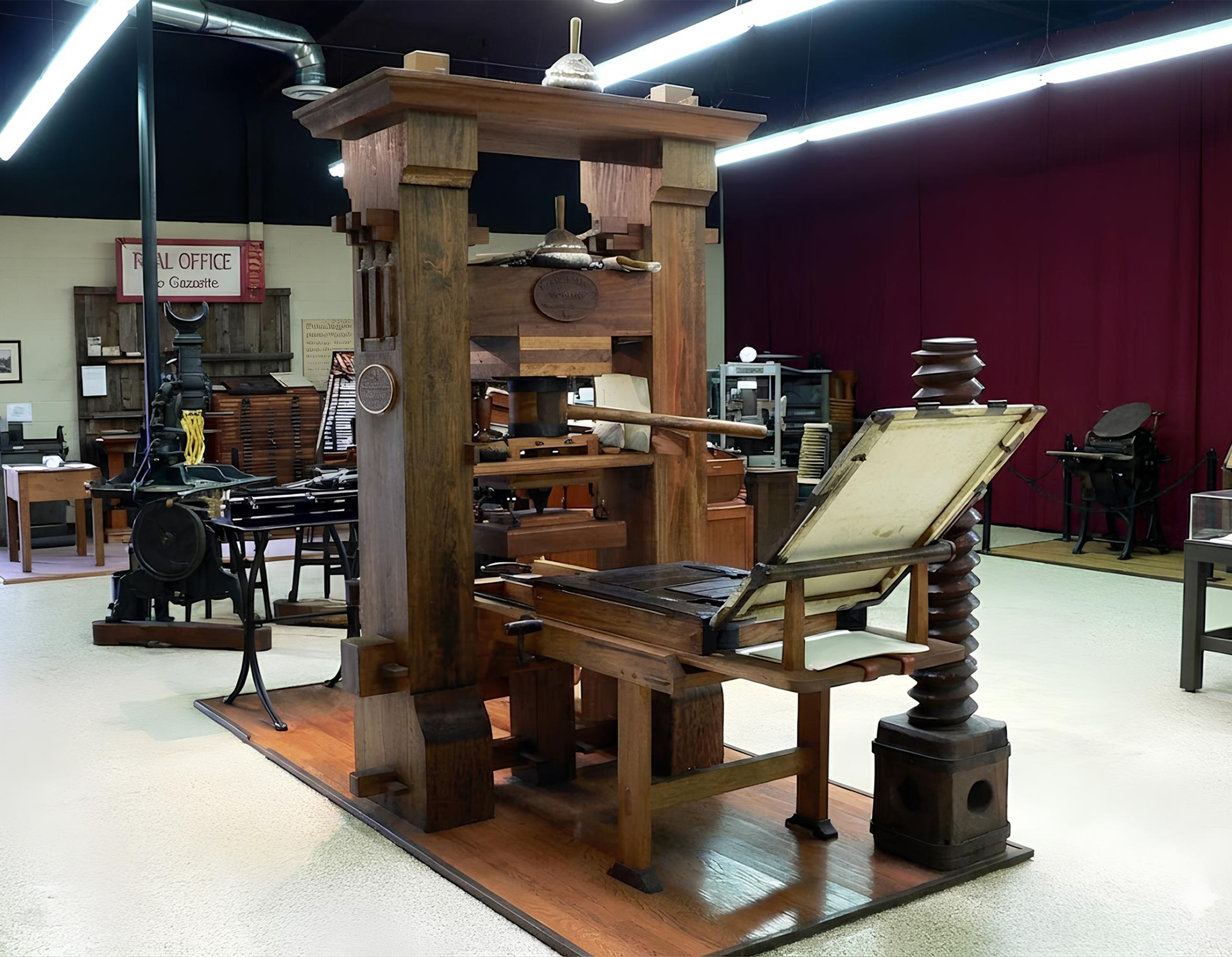
The movable type of printing was then invented in China during the 11th century by the Song dynasty artisan Bi Sheng. Johannes Gutenberg changed printing in around 1450 in Europe by combining movable metal type with a press, sparking the Renaissance and Scientific Revolution. The industrialization of printing techniques started in the 19th century when steam-powered presses were introduced, which massively increased printing speed. Offset printing ruled the early 20th century, then digital printing rose quickly for on-demand production.
Types of Printing
There are two main printing methods: digital printing and traditional printing. The main difference between them is how the image is transferred to the surface.
The traditional printing process is relatively complex. For design and file creation, it encompasses professional software to create them and separate colors. The second phase is plate-making, where the design files are converted to printing plates. The next step, pre-press preparation, includes installing plates, ink adjustment, and performing test prints to check color and image quality. The last two steps are formal printing and post-processing. The overall process results in three to four days for simple projects, and one to two weeks for complex projects with traditional printing.
Digital printing is simpler, as the first stage of design and file preparation consists of creating design files with basic color management and layout. The file processing and RIP (Raster Image Processor) processing, that is, converting design files into recognizable data streams through RIP software, usually takes minutes. Direct printing and post-printing are streamlined, as digital printers print images directly onto materials without plates. So, printing with digital printers takes a day, or in some cases, two or three days.
Now let's dive in to see the main differences and learn the print types that fall under each category.
Traditional Printing Methods
Traditional printing methods are time-honored technologies that don’t rely on digital techniques. They include engraving, offset lithography, gravure, and more.
Engraving
Engraving is a printmaking technique that carves a design into a flat surface using a sharp tool called a burin. In traditional engraving, ink fills the carved lines made by a burin, and under high pressure, the paper is forced into the grooves. There is a digital counterpart to engraving, called intaglio. The process involves cutting or etching the material itself rather than printing with ink. Businesses can use this printing method to create personalized, branded items, nameplates, awards, and gifts.
Pros:
- Grants affordable personalization;
- Brings durable results.
Cons:
- Is a time-consuming process;
- Is limited to certain materials.
Screen Printing
Also known as silk screen printing, this method involves transferring ink through a stenciled mesh screen to create the required design. Screen printing is great for anything but paper. Businesses use this cost-effective printing method to make apparel, large posters, coroplast lawn signs, vinyl decals, and metal or backlit signage.
Pros:
- Offers a low-cost option for bulk orders;
- Works for printing simple designs.
Cons:
- Can be resource-heavy as each color requires a separate stencil;
- Cannot be used for complex graphics.
Offset Lithography
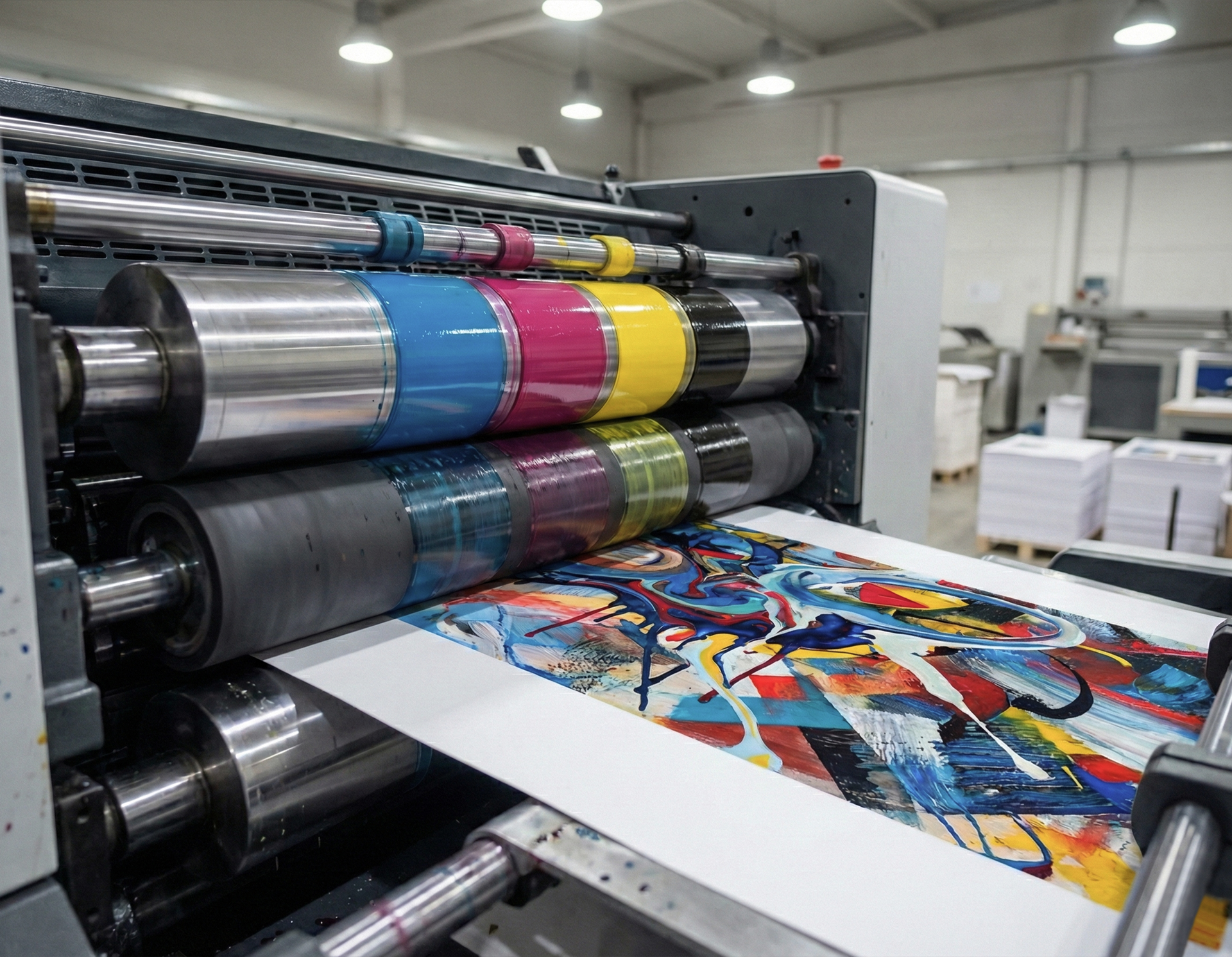
Among other traditional print types, offset lithography is the most widely applied method thanks to its high-volume commercial printing features. The inked image is transferred from a metal plate to a rubber blanket and then onto the printing surface, which is usually paper. Offset printing is great for bulk products, such as magazines, paper stationery, and ad materials.
Pros:
- Prints mass production items;
- Results in sharp, consistent prints;
Cons:
- Requires lengthy setup;
- Provides limited accessibility;
- Demands high minimum quantities to be cost-effective.
Letterpress Printing
This is one of the traditional methods of printing. This is a technique of relief printing that produces many copies by repeated direct impression of an inked surface, raised against individual sheets of paper. Letterpress printing is now prized for artisanal custom work, like commercial business card printing or wedding invitations.
Pros:
- Creates a tactile feel;
- Results in premium quality.
Cons:
- Requires a time-intensive setup;
- Is limited in color options;
- Generates low volumes.
Flexographic Printing
Flexographic printing involves a high-speed, roll-feed printing process. This type of printing consists of a photopolymer flexible plate wrapped around a rotating cylinder to transfer quick-drying ink directly onto the materials. Flexo printing is a dominant process for printing labels, flexible packaging, corrugated boxes, and paper products.
Pros:
- Is optimal for fast mass production;
- Handles textured materials and is ideal for packaging;
- Suits versatile materials.
Cons:
- Requires a lengthy setup process, resulting in extended turnaround time;
- Is not cost-effective for small runs;
- Demands high minimum quantities.
Rotogravure Printing
This printing method uses engraved metal cylinders to transfer ink directly onto materials. The cylinder is engraved with millions of tiny ink cells that form the image. The imagery results in exceptional vividness and remains consistent throughout a very long production run. Rotogravure is used for very high-volume printing and for magazines and packaging.
Pros:
- Provides exceptional detail and depth;
- Supplies consistent high-quality output;
- Functions fast for large volumes;
- Works for premium packaging.
Cons:
- Consumes time for setup;
- Incurs high costs and is not economical for small runs.
Digital Printing Methods
Digital printers reproduce images straight from digital files onto various substrates. They don’t need plates and print directly from the press to print on paper, photo paper, canvas, fabric, synthetics, cardstock, or other materials.
3D Printing
This printing technique is an innovative method of making three-dimensional objects from a digital file. 3D printers deposit materials like plastic and resin layer by layer, creating solid objects. Businesses use this print type to create exquisite pieces of art, like signs or logos with a three-dimensional effect.
Pros:
- Works best for quick prototyping;
- Is cost-effective for one-offs;
- Offers minimal material waste;
- Reproduces customizable designs.
Cons:
- Has slow production times for large objects;
- Is limited to single units.
Inkjet printing
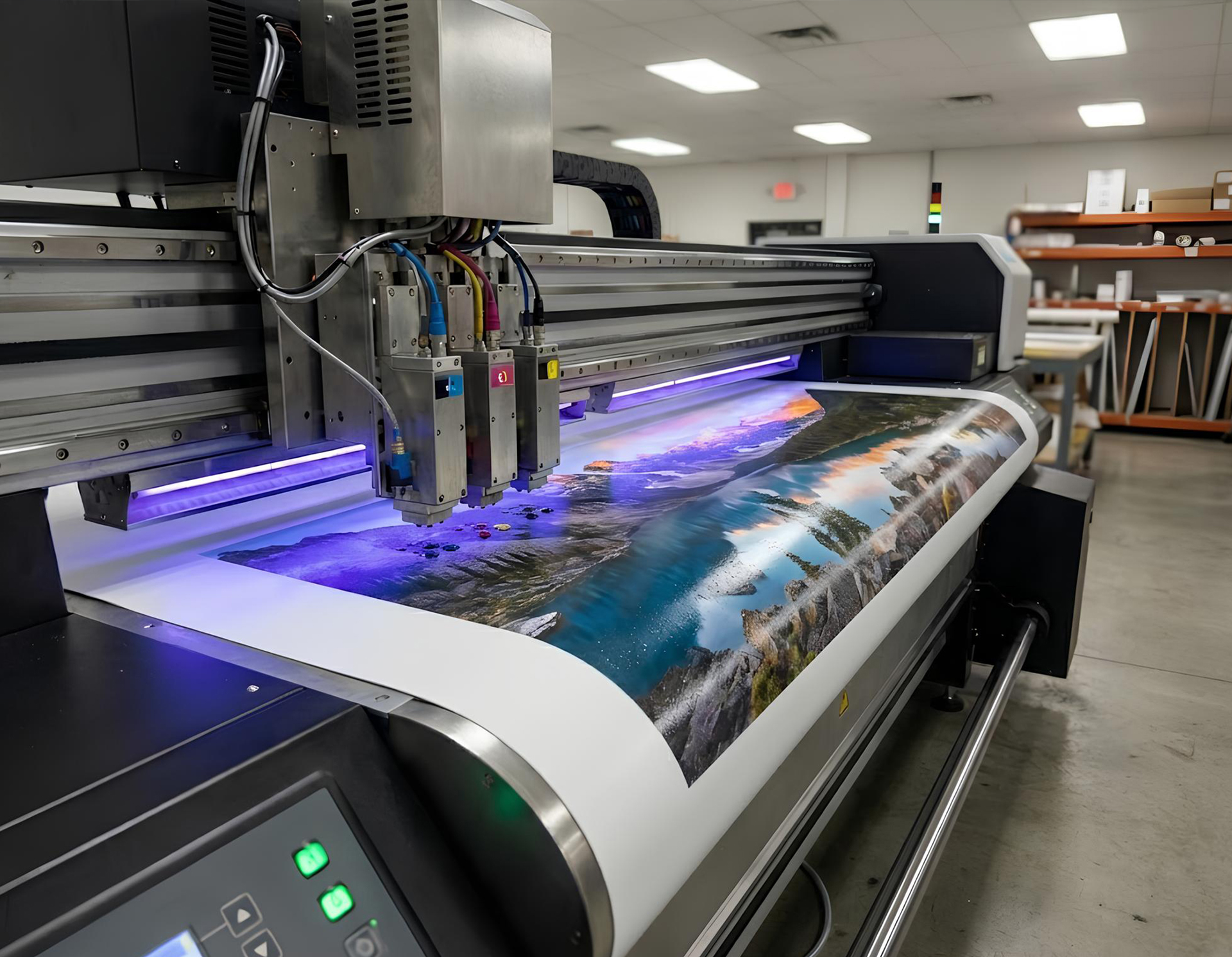
Inkjet printing propels tiny droplets of ink through nozzles onto paper, fabric, or other materials to create high-resolution designs. Perfect for wide-format printing, this digital printing technique is used to make banners, aluminum signs, and even window decals.
Pros:
- Provides supreme color accuracy;
- Generates sharp imagery;
Cons
- Proves expensive for ink cartridge refilling;
- Has relatively slow production time.
Laser Printing
Laser printing uses a laser beam to project an image onto an electrically charged drum. The drum then attracts toner powder to transfer graphics onto the material, sealing with heat in the end. This printing type is used to make room numbers, safety signs, name plates, and other printed signage.
Pros:
- Achieves precise color reproduction;
- Suits household applications.
Cons
- Requires regular maintenance and cleaning;
- Takes up considerable space.
LED UV Printing
Among different types of printing, LED UV printing is an eco-conscious variant, reducing energy consumption. The process consists of drying inks instantly under the UV light. The result is high-definition and textured printing on various substrates. This printing type is great for custom signs, acrylic displays, point-of-purchase signs, posters, large-format banners, stationery, and more.
Pros:
- Results in an instant ink dry process, fast turnaround time;
- Produces high-resolution prints;
- Operates as an eco-friendly solution;
- Supports printing on versatile substrates.
Cons:
- Requires high prices to pay;
- Features a limited color gamut compared to some inkjet systems.
Sublimation Printing
This is a printing style that uses heat and pressure to turn specialized ink into a gas, then bonds it into polyester fabrics or polymer-coated surfaces. Sublimation printing creates products that never peel or fade as the ink becomes part of the material rather than sitting on the surface. Fabric signs, similar to feather flags and logo table covers, use this printing method the most.
Pros:
- Offers the best technique for printing on fabric;
- Produces durable items;
- Reduce environmental waste.
Cons
- Cannot be applied to different materials, only to polyester fabric;
- Can only print on white materials.
Large Format Printing
This is not a separate printing method, but rather a scale of printing that uses different technologies, such as UV inkjet or sublimation printing. As the name suggests, it’s for creating oversized graphics that can serve informational and marketing purposes. Key applications include vinyl banners, trade show displays, floor graphics, and vehicle wraps.
Pros:
- Works for outdoor advertising material printing;
- Offers fast production process;
- Delivers durable prints;
- Has versatile material compatibility.
Cons:
- Encounters precision challenges at scale;
- Results in high-equipment costs;
- Requires specialized expertise.
How to Choose the Right Method of Printing
Businesses might feel overwhelmed when choosing the best printing type for their business needs because there are so many options. Factors like material, volume, or turnaround time can help determine which printing technique is best for your business.
Budget Considerations
If you want to invest a large budget in your constant branding or marketing efforts, offset printing is a preferable choice. For a limited budget and temporary promotions, digital printing, like inkjet or laser, is perfect.
Color Accuracy
Color is one of the most important factors shaping your brand identity. Choose the right printing method to ensure your brand colors shine in your signage. Traditional printers allow exact mixing of Pantone colors, which is ideal for brand-specific colors for brand consistency in the long run. Digital printers use CMYK inks, which may be challenging for precise brand color matching. On the other hand, digital printing is best for fast production turnaround times and has many customization options.
Quality
Print quality is critical for inspiring client trust. There are key factors determining whether your signage will make a professional impression:
- Resolution: Higher DPI (dots per inch) produces crisp imagery that looks professional up close and from a distance.
- Color accuracy: Precise color matching ensures brand consistency across all your materials.
- Material compatibility: Quality printing requires proper ink adhesion to your chosen substrate, ensuring durability and visual appeal.
Quantity
Quantity is an undeniably important factor to consider when choosing the printing method. It directly affects your decision on whether you’ll select traditional or digital printing.
Choose traditional printing for large print quantities, e.g. 1,000-2,000+ units. Traditional printing techniques may require higher initial prices to set up plates, but it’s cost-effective in the long run. For short-term small-quantity printing, choose digital printing methods, as they don't have a setup fee, have less turnaround time, and are essential for customized materials.
Turnaround time
Digital printing offers fast turnaround time as you don’t have to spend time of around one to three business days. Traditional printers require more time for printing (five to seven business days), as the process involves time-consuming plate creation and drying.
Materials and Surfaces
Different materials and surfaces require special printing techniques. Polyester fabric, for instance, requires dye-sublimation that bonds inks with the material permanently. Vinyl, PVC, and plastic need large format inkjet printing or UV printing with flexible inks that won't crack. Metal, aluminum, and acrylic work with UV printing for high-definition results. If you deal with textured surfaces, you need flexography for flexible materials.
Comparison of Printing Methods
| Printing Method | Best For | Print Volume | Colour Quality | Typical Applications |
|---|---|---|---|---|
| Sublimation Printing | Polyester fabrics, coated materials | Low to Medium | Excellent – vibrant, permanent colors that don’t fade or crack | Custom apparel, sportswear, flags, promotional products |
| LED UV Printing | Rigid materials, non-porous surfaces, high-quality vinyl | Low to High | Excellent – sharp detail, vibrant colors, works on any color substrate | Signage, acrylic prints, promotional items, wide-format vinyl |
| Inkjet Printing | Paper, photo prints, banners, decals, aluminum | Low to Medium | Excellent – high resolution for photos | Photo printing, banner printing, marketing materials |
| Large Format Printing | Banners, posters, vehicle wraps, building signage | Low to Medium | Good to Excellent – depends on printer type | Billboards, trade show displays, window graphics, wall murals |
| Laser Printing | Rigid materials, business materials | Low to Medium | Good – crisp text, decent color | Business cards, safety signs, office signs, nameplates |
| 3D Printing | Prototypes, custom objects, dimensional items | Very Low (one-off) | N/A – creates physical objects, not prints | 3D signs, architectural storefront designs, aluminum signs, acrylic signs |
| Offset Lithography | High-quality marketing materials, publications | High (1,000+ units) | Excellent – consistent color, sharp detail | Magazines, catalogs, brochures, packaging, books |
| Screen Printing | Textiles, posters, promotional items | Medium to High | Excellent – bold, vibrant, durable colors | T-shirts, tote bags, posters, signage, labels |
| Letterpress Printing | Premium stationery, artistic prints | Low to Medium | Good – tactile impression, limited colors | Wedding invitations, business cards, art prints, luxury packaging |
| Engraving | Metal, wood, glass, leather | Very Low | N/A – creates relief and depth, not color | Awards, plaques, jewelry, personalized gifts, nameplates |
| Flexographic Printing | Packaging, labels, flexible materials | Very High (10,000+ units) | Good – suitable for simple designs | Food packaging, corrugated boxes, labels, plastic bags, newspapers |
| Rotogravure Printing | High-volume packaging, publications | Very High (100,000+ units) | Excellent – consistent, high-quality imagery | Magazines, catalogs, gift wrap, wallpaper, decorative laminates |
Create Your Perfect Prints
If you still can’t decide on different print styles, Square Signs can help you choose. Whether you need to choose a printing method for your outdoor design, or run a short promotional campaign inside your store, we’ll guide you through this tough process with the right advice. Furthermore, you’ll find our design tool extremely helpful when creating your design from scratch. You can also customize and use a pre-made template for your signage. Reach out to us and we’ll handle all your printing needs with the highest quality possible.
FAQs
What are the different types of printing?
The main printing types fall under digital printing and traditional printing techniques. Digital printing includes inkjet, laser, LED UV, and sublimation. Traditional printing methods include offset lithography, screen printing, letterpress, flexographic, and rotogravure printing.
What should I consider when choosing a printing type for my business?
Several factors, including color accuracy, printing quality, budget, turnaround time, and more, are decisive factors when choosing a printing method.
What is the most common printing method?
It depends on what you’re going to print. For example, offset printing is considered the most popular printing type for high-volume printing, such as magazines and brochures. For signage printing, digital printing methods are widely used as they’re low-budget for low volumes, offer fast production periods, and have the ability to handle variable data for unique designs.